The Exoskeleton Revolution: Why 2026 Is the Year Worker Augmentation Goes from Pilot to Production
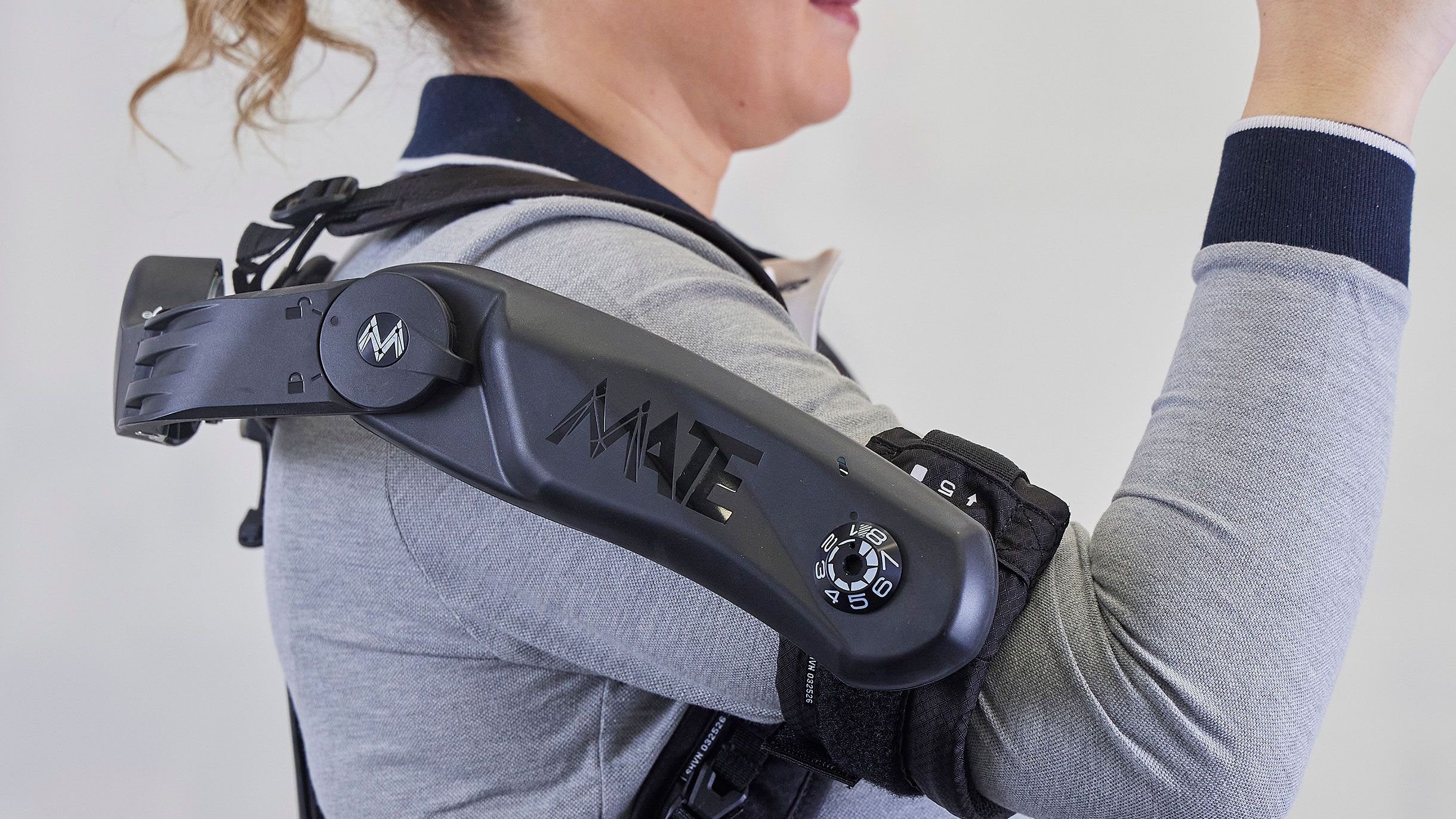
Something changed in the first half of 2026. Not gradually — measurably. Across manufacturing floors, construction sites, and warehouse logistics centers, exoskeletons are no longer a curiosity or a pilot program. They are becoming a standard line item in workplace safety budgets.
The numbers tell the story. Four independent analyst firms now converge on the same trajectory: MarketsandMarkets projects the industrial exoskeleton market to grow from $0.56 billion in 2025 to $2.03 billion by 2030 — a compound annual growth rate of 29.4%. Mordor Intelligence puts the figure at $2.35 billion by 2031. Grand Research sees the industrial sub-segment alone reaching $1.7 billion by 2034, growing at 30.3% annually. No major analyst is below 20% CAGR. This is not hype — it is consensus.
Three converging signals confirm the shift: product maturity, investment momentum, and real-world results at scale.
Market Growth — Analyst Consensus
Global Exoskeleton Market Size Projections (USD Billions)
Sources: MarketsandMarkets (2025), Mordor Intelligence (2026), Grand Research (2026), POC.HK
Signal 1: Production-Proven Products at Accessible Prices
The passive exoskeleton — spring-based, zero batteries, near-zero maintenance — has become a credible capital expense at an accessible price point. Comau's MATE-XT costs $4,295, is Category II PPE certified, and reduces shoulder strain by up to 50% during overhead work. The MATE-XT GO weighs under 3 kg, donning in under 30 seconds, and is certified for cleanroom environments.
On the powered side, German Bionic's Exia — debuting at CES 2026 — provides up to 38 kg of dynamic lift support, runs on AI trained on billions of real-world motion data points, and receives over-the-air updates. At EUR 199 per user per month under an Equipment-as-a-Service model, the subscription unlocks the SME market that could never justify a six-figure capital purchase.
The cost curve is bending faster than anyone predicted. Goldman Sachs reports robot manufacturing costs dropped 40% between 2023 and 2024. McKinsey calculates the payback period for an industrial exoskeleton has compressed from 5.3 years in 2019 to 1.3 years in 2024.
Signal 2: Billions in Investment
Funding data tells a clear story. Figure AI raised $1 billion in Series C at a $39 billion valuation. Apptronik secured $403 million in Series A. Wandercraft closed $75 million in Series D after winning the SXSW Innovation Award for AI. Total robotics startup funding hit $8.5 billion in 2025 — the highest since 2021.
This is not speculative venture money chasing a trend. Automakers are writing checks: Renault Group participated in Wandercraft's round. Mercedes backed Apptronik. These are industrial companies placing strategic bets on a technology they intend to deploy on their own factory floors.
Signal 3: Results at Scale
The most important development is the one that gets the least attention. BMW's Spartanburg plant built over 30,000 X3 vehicles using the Figure 02 humanoid robot over 11 months — cycling 90,000 components, completing 200+ miles of robotic travel, achieving 99%+ placement accuracy. This was not a lab demo. It was a production line that ran shift after shift for nearly a year.
Ford's EksoVest deployment operates across 15 plants in 7 countries, with workers performing up to 4,600 overhead reaches per shift while seeing 30–40% reductions in shoulder muscle exertion. DHL's pilot of German Bionic suits showed a 30% increase in picking efficiency, 50% fewer fatigue incidents, and 95% positive worker feedback.
Real-World Deployment Results
Sources: BMW Group Press, Ford Media, German Bionic, Santa Clara University Study
Why This Matters:
The question is shifting from "if" to "when." Your competitors who started pilots in 2024 are now scaling. Your workforce is aging — the 60+ population is projected to double to 2.1 billion by 2050. And the technology has reached a point where waiting no longer reduces risk — it only delays the competitive advantage that early adopters are already building.
The Workplace Ergonomics Brief is a weekly newsletter by Next Reality Robotics. We help safety leaders, HR professionals, and operations teams stay ahead of the worker augmentation revolution.
Subscribe to the newsletter →