
AI-Powered Exoskeletons: How Machine Learning Is Making Wearable Robotics Smarter
Technology | 2026-06-30
🔬 In Brief: The exoskeletons unveiled at CES 2026 share a common breakthrough — artificial intelligence that learns, adapts, and predicts user movement in real time. Here is how the technology works and what it means for workplace safety.
Beyond Passive Support: The AI Era
Early exoskeletons were purely mechanical — springs, cables, and counterbalances that redirected force without any "intelligence." They worked well for repetitive, predictable tasks but struggled to adapt when the worker's movement changed. The 2026 generation is fundamentally different.
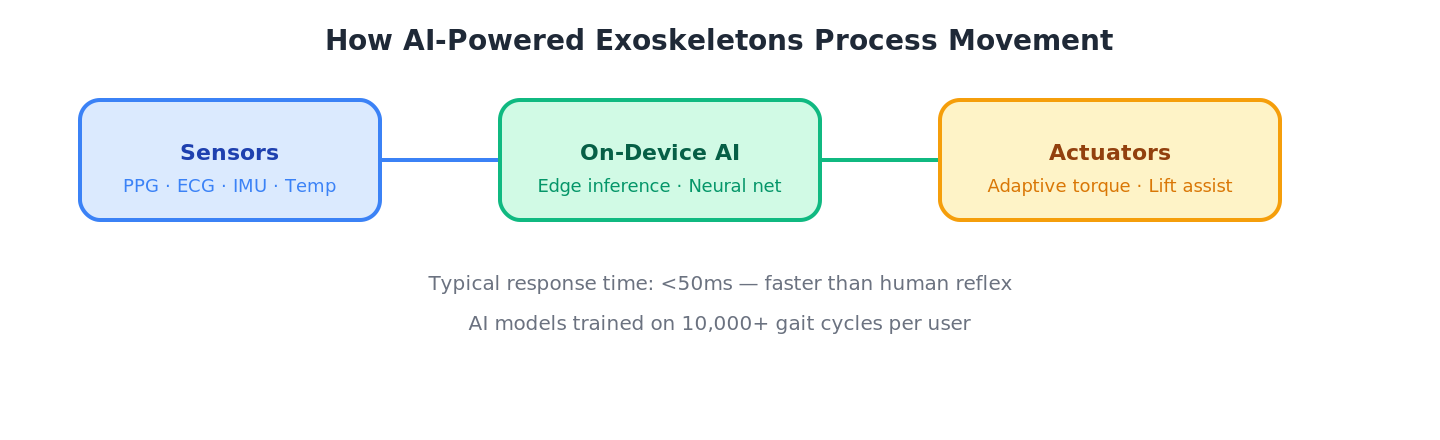
Today's powered exoskeletons integrate three layers of intelligence: sensor fusion (combining data from multiple biometric and motion sensors), real-time AI inference (processing that data on-device within milliseconds), and adaptive actuation (adjusting support levels dynamically based on what the user's body is doing).
Key Technologies Driving the Shift
🧠 AI Gait Learning
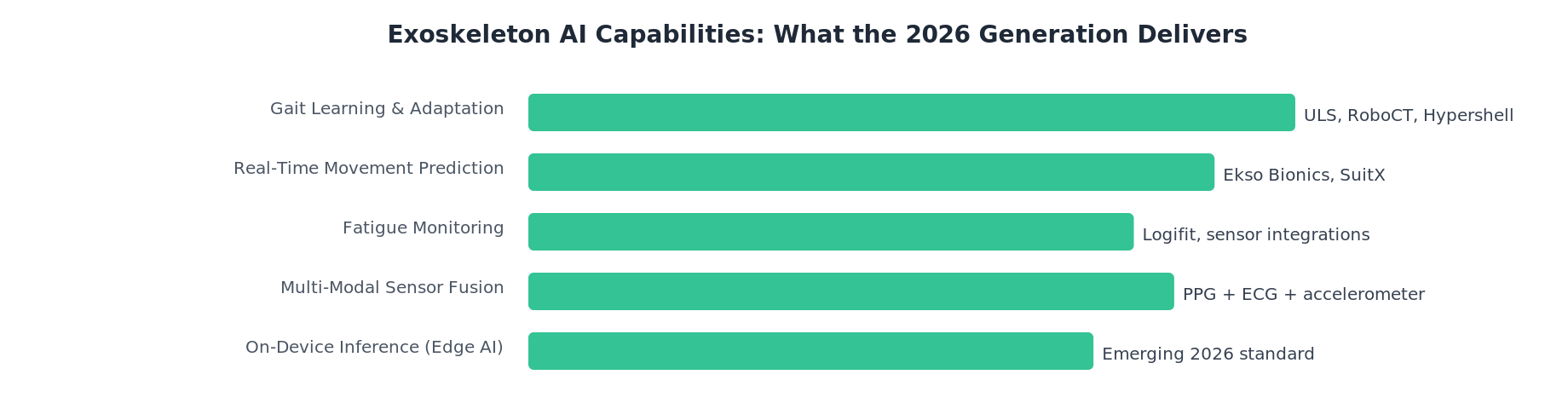
ULS Robotics' VIATRIX uses an AI adaptive learning system trained on individual user gait patterns. The device personalizes assistance over time, learning how each user walks and adjusting support accordingly.
📡 Multi-Modal Sensing
Next-generation wearables stack PPG (pulse timing), ECG (electrical rhythm), accelerometers (motion/posture), and skin temperature sensors in a single compact unit. Context-gating ensures clean data.
⚡ Edge AI Processing
On-device neural networks compress weeks of waveform data into summaries for sync — no need to upload raw PPG at 100Hz all day. Response times under 50ms keep the assistance feeling natural.
🔄 Predictive Assistance
Ekso Bionics and SuitX are developing exoskeletons that "predict" user intentions — anticipating a lifting motion before it begins and applying pre-emptive support at the exact moment it is needed.
What This Means for Workplace Safety
For NRR's audience, the AI revolution in exoskeletons translates directly to operational advantages. Adaptive assistance means a single device works effectively across different workers with different body types and task requirements. Predictive support reduces cognitive load — the worker doesn't have to "think" about using the device. And on-device processing preserves privacy: worker data stays on the device, never leaving the factory floor.
The technology is also becoming lighter. RoboCT's GoGo weighs just 2.3kg per side. Lighter devices mean longer wear times and higher adoption rates. For safety leaders evaluating exoskeleton programs, the 2026 generation solves many of the adoption barriers that held earlier versions back.
💡 Practical Takeaway: When evaluating exoskeletons for your workforce, prioritize AI-native designs over purely mechanical ones. The ability to learn and adapt to individual users is the single biggest predictor of long-term worker acceptance and program success.
💡 Want to Learn More?
Next Reality Robotics helps organizations evaluate, pilot, and deploy workplace exoskeleton solutions. Subscribe to The Workplace Ergonomics Brief for weekly insights delivered to your inbox.