
The Exoskeleton Revolution Goes Mainstream
Trends & Opinion | 2026-06-30
🏆 The Big Picture: Three major CES 2026 product launches, a market projected at $64.23 billion by 2034, and consumer-grade exoskeletons hitting the market — 2026 may be remembered as the year exoskeletons crossed from industrial niche to mainstream adoption.
Something Shifted at CES 2026
Walk the floor at any CES in the past decade and you'd find exoskeletons tucked away in robotics pavilions — bulky prototypes for hospital rehab or military programs. CES 2026 was different. Three companies independently unveiled consumer-grade wearable robots, and the message was unmistakable: exoskeletons are no longer just industrial tools or medical devices.
ULS Robotics debuted VIATRIX™, its first consumer exoskeleton, and won a CES Innovation Award in the process. The device features an innovative Float360™ floating hip joint, automotive-grade motors, and an AI gait learning system, with a 25km battery range that works in temperatures from -20°C to 65°C. RoboCT unveiled the GoGo Exoskeleton series — weighing just 2.3kg per side — designed for community mobility, post-stroke recovery, and aging-in-place support. And Hypershell was named the #1 global consumer exoskeleton by sales volume, proving the market is already voting with its wallet.
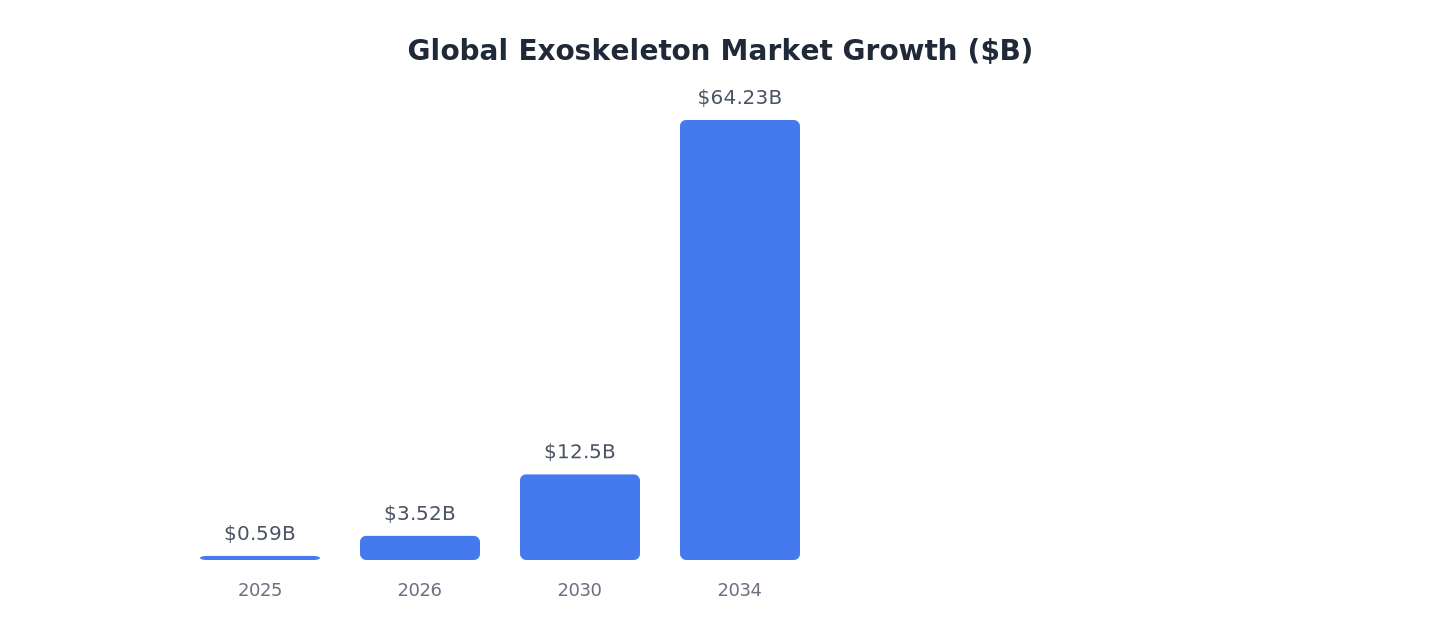
Source data: Fortune Business Insights, Data Bridge Market Research, CES 2026 official awards. The exoskeleton market is projected to grow from $3.52B (2026) to $64.23B (2034) at a CAGR of 43.7%.
Three Signals, One Trend
When three independent data points align, you have a trend worth watching:
- Consumer-grade products are here. VIATRIX, GoGo, and Hypershell all target consumers, not just factory floors. Prices are still high (thousands of dollars), but the product category now exists.
- AI is the differentiator. Every major 2026 launch includes AI-based gait analysis, adaptive assistance, or personalized movement learning. The hardware is becoming a platform for intelligence.
- The industrial pipeline is feeding the consumer market. ULS Robotics spent 7 years perfecting industrial exoskeletons across 30+ industries before releasing VIATRIX. The technology has been battle-tested at scale.
What This Means for Employers
For HR, safety, and operations leaders, the consumerization of exoskeleton technology matters because it drives three things: cost reduction (mass production brings prices down), worker familiarity (employees who see exoskeletons in daily life will be more willing to wear them at work), and workplace integration (supply chain and logistics companies can adapt consumer-grade lightweight designs for occupational use). The trend is clear: the technology that helps your workforce today will be more affordable, more accepted, and more capable tomorrow.
💡 Why This Matters: "Exoskeleton-as-a-Service" (EaaS) subscription models are emerging, eliminating the upfront capital barrier that has kept small and mid-sized employers from adopting the technology. The shift from purchase to subscription could accelerate workplace adoption faster than any product launch.
💡 Want to Learn More?
Next Reality Robotics helps organizations evaluate, pilot, and deploy workplace exoskeleton solutions. Subscribe to The Workplace Ergonomics Brief for weekly insights delivered to your inbox.