
The solar industry has a back problem. Installers spend hours hunched over rooftop mounting rails, lifting 40-pound panels into position, and threading cables in awkward crouches. Now a German startup called Htrius has launched a passive exoskeleton specifically designed to fix it — no batteries, no motors, no charging station required.
What BionicBack Actually Does
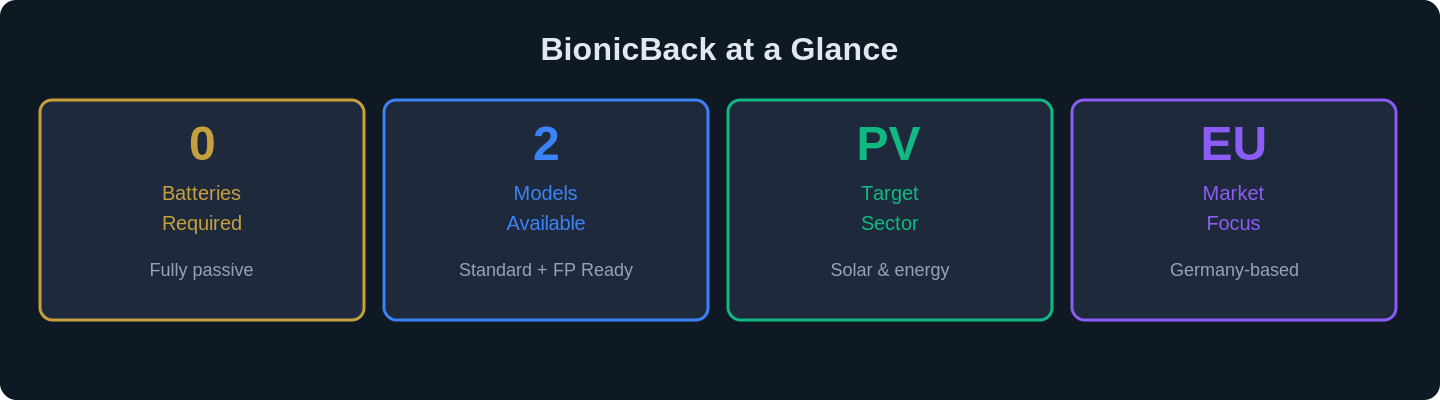
The BionicBack provides mechanical support for the lower back during repetitive bending and lifting tasks. Htrius designed it for the exact motions that define solar installation: mounting photovoltaic modules and support structures, laying cables, installing inverters, and handling materials on construction sites and in warehouses. The device moves with the user without restricting mobility, and its lightweight design allows quick donning and adjustment for different users.
Because it's a passive exoskeleton, BionicBack stores and returns energy mechanically — think of it as a spring-loaded assist for your spine rather than a powered robot. That means zero downtime for charging, zero maintenance on motors or batteries, and a dramatically lower price point than powered alternatives like the German Bionic Apogee or the Hilti EXO-S.
The Rooftop Version: Fall-Protection Ready
Htrius also developed the BionicBack FP Ready, a variant designed for work at heights that requires personal fall protection equipment. The system is compatible with standard fall protection gear, enabling ergonomic support while meeting safety requirements for rooftop work — the most common environment for photovoltaic installations. For EHS managers in solar, this removes the traditional trade-off between wearing an exoskeleton and maintaining fall-arrest compliance.
Why This Matters for EHS Leaders
According to Htrius, growing demand for renewable energy installations and a shortage of skilled workers are increasing the importance of ergonomics in the sector. The company says reducing fatigue and musculoskeletal injuries can improve productivity and support workforce retention. With the U.S. solar workforce projected to need tens of thousands of additional installers by 2030, tools that reduce the physical toll of the job aren't a luxury — they're a retention strategy.
The broader trend is clear: passive exoskeletons are finding their niche in verticals where powered devices are overkill. Solar installation, roofing, HVAC, and warehouse picking all involve repetitive bending that a $5,000 powered exoskeleton doesn't justify — but a lightweight passive device at a fraction of the cost absolutely does.
Reducing fatigue and musculoskeletal injuries can improve productivity and support workforce retention.
Sources: pv magazine — German startup offers passive exoskeletons for PV installers (July 6, 2026)