
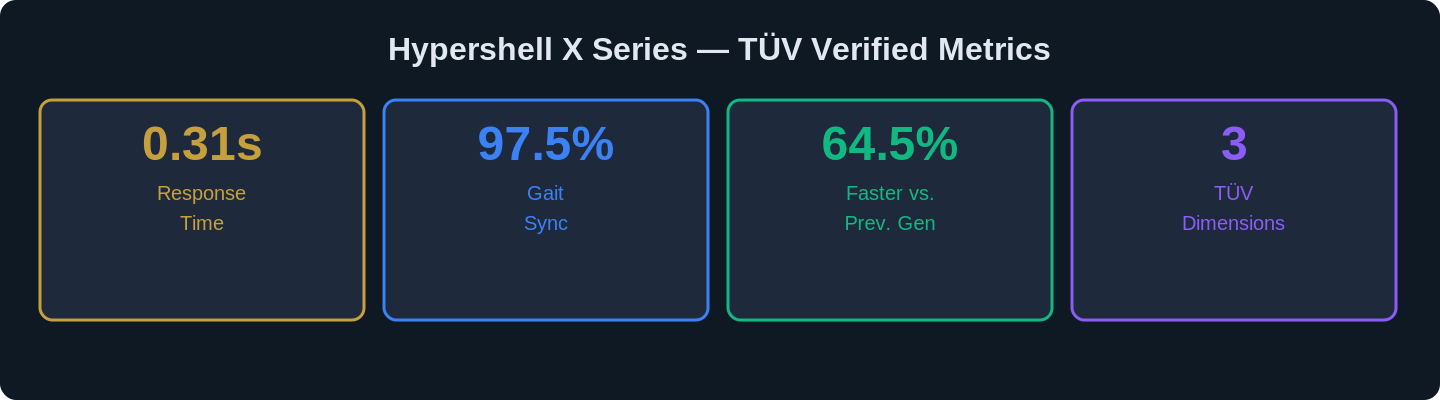
When TÜV Rheinland issued a verification statement for Hypershell's X Series consumer exoskeletons in June 2026, it marked the first time an end-to-end integrated consumer exoskeleton received independent third-party verification for both assistance response time and human-machine synchronization, as covered by the Exoskeleton Report. The numbers are impressive — 0.31-second response time, 97.5% gait synchronization — but the real story for workplace buyers isn't the product. It's the framework.
Three Metrics That Actually Matter
TÜV Rheinland evaluated the Hypershell X Series across three dimensions that translate directly to any exoskeleton evaluation, whether you're looking at a consumer hiking device or an industrial shoulder support:
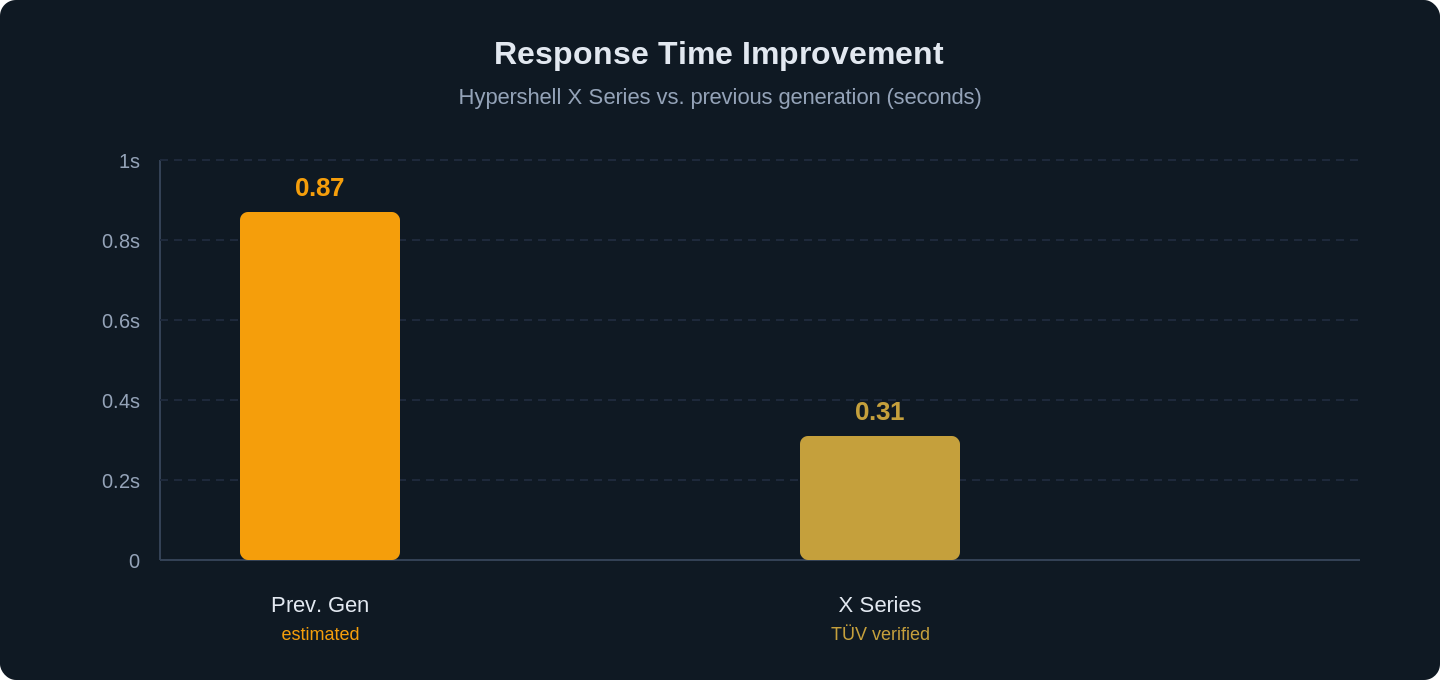
- Assistance Response Time: How fast does the device detect a change in movement (starting, stopping, transitioning) and deliver appropriate assistance? Hypershell achieved 0.31 seconds — a 64.5% improvement over its previous generation.
- Human-Machine Synchronization: How well does the device follow the user's natural movement rhythm? Hypershell scored 97.5% gait synchronization across varied terrain.
- Subjective User Experience: Do actual users perceive the assistance as timely, smooth, and natural? This qualitative layer catches problems that sensors miss.
How to Apply This to Your Next Exoskeleton Evaluation
Most exoskeleton vendors will give you a peak-assistance number (e.g., 'reduces shoulder load by 40%'). That's necessary but not sufficient. The TÜV framework suggests you should also ask:
- What is the measured response time, and how was it tested? (Lab treadmill vs. real task?)
- What is the synchronization score across the specific movements your workers perform? (Overhead reaching is different from walking.)
- Can you provide subjective usability data from workers in your industry, not just healthy volunteers?
- Is the device certified or verified by an independent body (TÜV, CE, ANSI), or are all metrics self-reported?
The Takeaway
Don't buy an exoskeleton on peak-assistance claims alone. Build your evaluation rubric around response time, synchronization, and subjective usability — the same three pillars TÜV Rheinland used. If a vendor can't provide independently verified data on all three, that's a red flag worth more than any spec sheet.
Sources: PR.com / TÜV Rheinland (Jun 26, 2026); Exoskeleton Report Week 27