
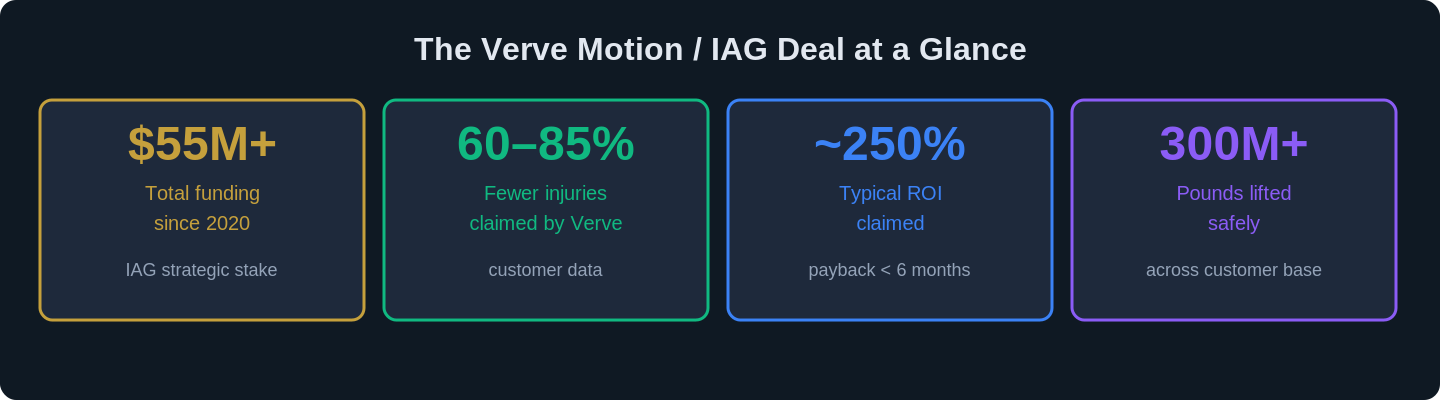
When the parent company of British Airways, Iberia, and Aer Lingus writes a check to an exoskeleton startup, it's worth paying attention. International Airlines Group (IAG) has taken a strategic stake in Harvard spinout Verve Motion, a deal that pushes Verve's total funding since 2020 past $55 million. For EHS and operations leaders, the headline isn't the dollar figure — it's what it signals: wearable robotics is crossing from 'interesting pilot' to 'strategic asset' that blue-chip corporations now invest in directly.
What IAG is actually doing
Read the fine print and this is an investment-and-testing partnership, not a fleet-wide rollout. Through its IAGi Ventures arm, IAG will help develop and trial a new aviation-specific wearable initially aimed at supporting baggage handlers' shoulders during the repetitive lifting that defines ground and cargo operations. Separately, safety-distributor HexArmor/uvex will help commercialize and distribute Verve's existing SafeLift exosuit. As the Exoskeleton Report noted in its Week 28 roundup, testing is likely to start with British Airways — and the partnership is explicitly about co-development, not an off-the-shelf purchase order.
Why the numbers turn heads
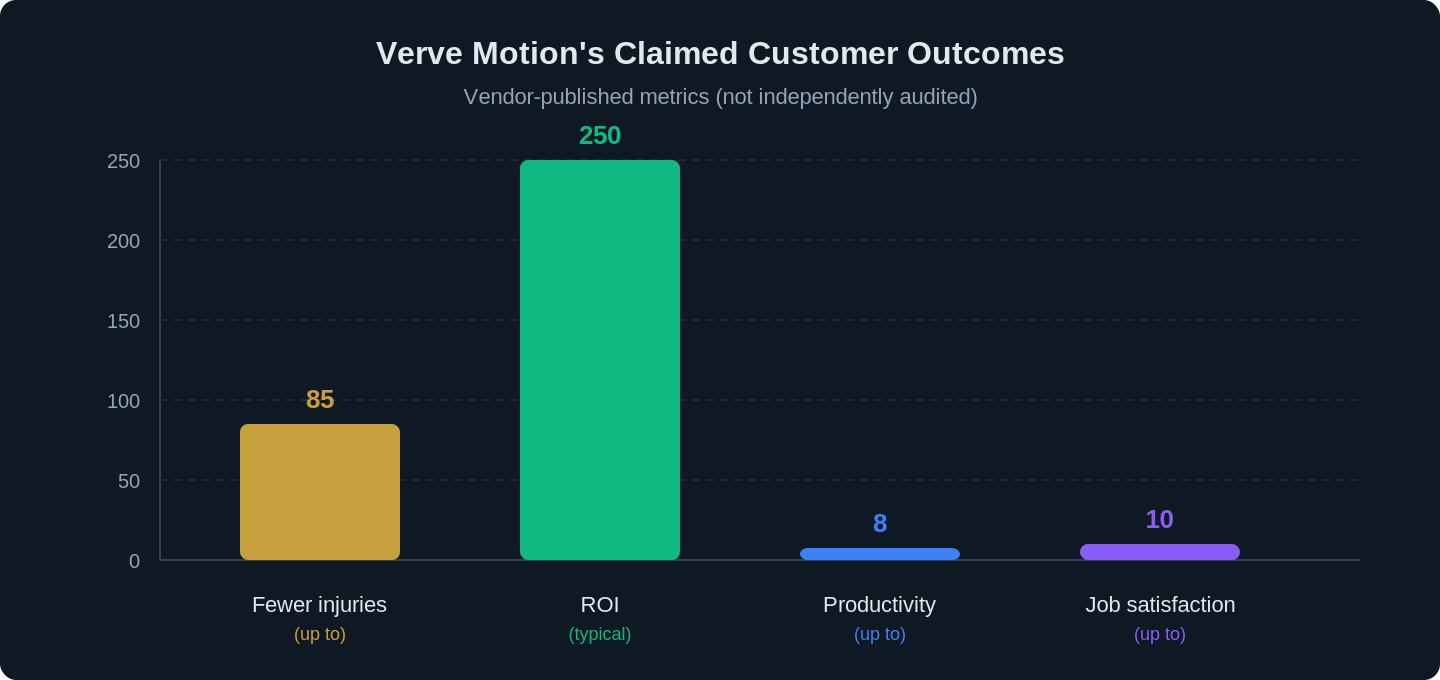
Verve's published customer results are the kind of figures that move a conversation from the safety manager's desk to the CFO's: a 60–85% reduction in injuries, a 4–8% productivity lift, a greater-than-10% bump in job satisfaction, and a typical ROI around 250% with payback in under six months. Treat vendor-published metrics with the usual skepticism — they aren't independently audited — but the direction is consistent with the broader evidence base on soft powered exosuits for repetitive lifting.
So what: the trend your leadership should see
The strategic read for operations leaders is this: the buyers of exoskeletons are changing. For years, adoption was driven bottom-up — a safety team ran a 30-day pilot, gathered injury data, and tried to justify the spend. Now major corporations are moving top-down, taking equity positions and co-developing custom devices for their own workflows. That shifts the internal conversation. If you're building a business case for wearable robotics, you're no longer arguing about whether the technology is mature enough to test — you're explaining why your organization is still on the sidelines while peers are investing. The practical first step hasn't changed: identify your highest-strain repetitive-lifting task, run a time-boxed pilot with clear injury and productivity metrics, and let the data — not the hype — make the case.
Sources: International Airlines Group; Verve Motion; Exoskeleton Report (Week 28, 2026)