
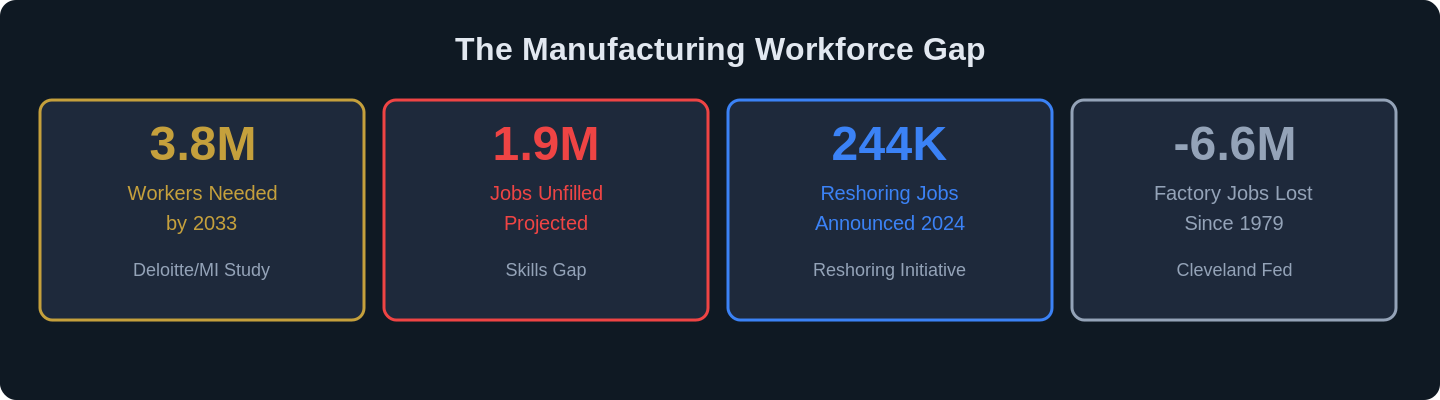
The U.S. manufacturing sector could need as many as 3.8 million additional workers between 2024 and 2033 — and 1.9 million of those jobs may go unfilled, according to a new study from Deloitte and The Manufacturing Institute. The numbers are staggering, but the hidden cost isn't just lost output. It's the physical toll on the workers who remain.
The Reshoring Paradox
Companies announced 244,000 reshoring and foreign-investment jobs in 2024 alone, the Reshoring Initiative reported. Of those, 88 percent were in high or medium-high tech sectors. Demand is not the problem. Finding people to run the plants is.
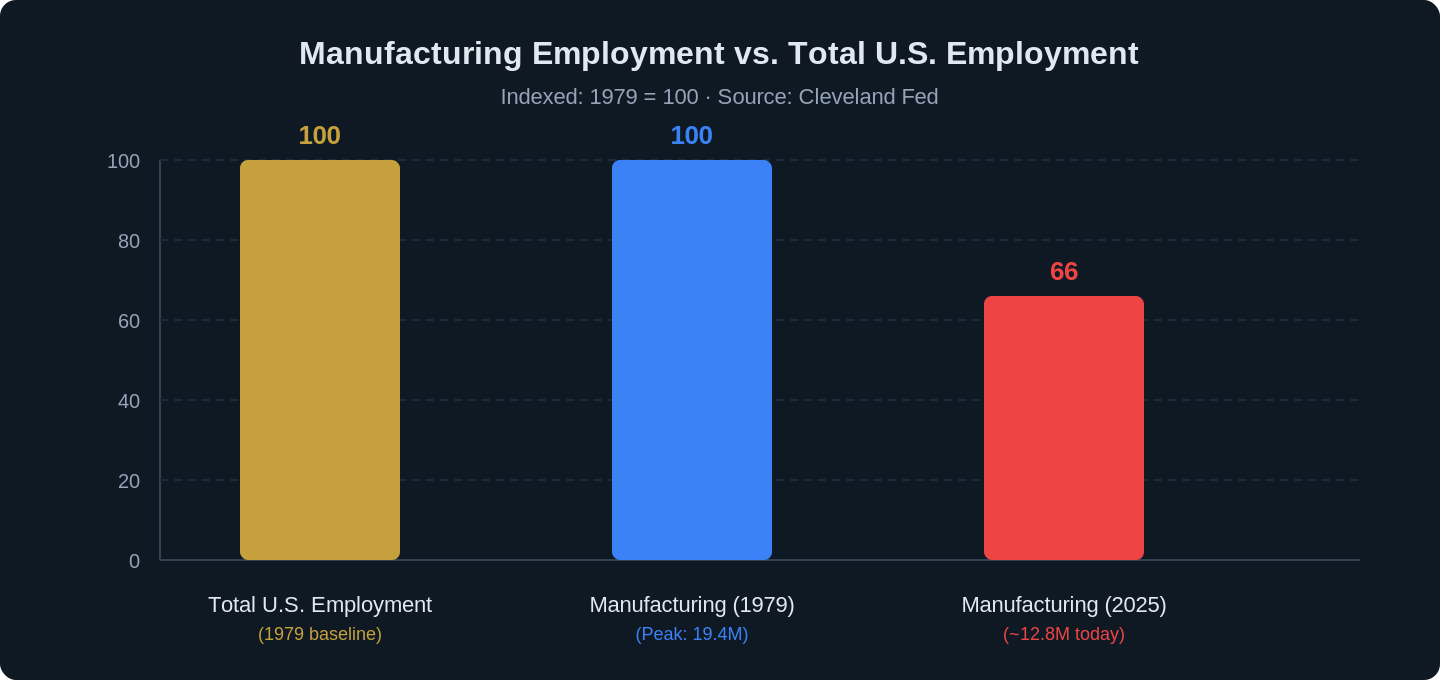
Total U.S. employment grew by 68 million between 1979 and 2025 while manufacturing employment fell by 6.6 million, the Federal Reserve Bank of Cleveland reported. Factory jobs peaked at 19.4 million in 1979 and sit near 12.8 million today. The hiring pool was drained long before the first reshoring announcement.
Why This Is an Ergonomics Problem
When 1.9 million positions go unfilled, the work doesn't disappear — it gets redistributed. Existing workers take on longer shifts, heavier loads, and more repetitive tasks. The result is a predictable surge in musculoskeletal disorders (MSDs), which already cost U.S. employers more than $19 billion annually in workers' compensation, according to the National Safety Council.
Fewer workers doing more physical work means more fatigue, more injuries, and more turnover — which deepens the shortage further. It's a vicious cycle that no amount of hiring alone can solve.
The Corporate Response
In July 2026, BlackRock, Carhartt, Ford, and Google launched the Alliance for America's Skilled Trades, a coalition to expand apprenticeship programs and promote pathways into the trades. "Investment in America's infrastructure will help shape the country's long-term economic trajectory, but its success ultimately depends on the skilled workforce that brings these projects to life," said Bayo Ogunlesi, BlackRock's chairman.
But training new workers takes years. In the interim, the physical demands on today's workforce are intensifying. This is where worker augmentation — passive exoskeletons, ergonomic tooling, and smart workstation design — becomes not a luxury but a necessity.
The Takeaway for EHS Leaders
The skills gap is not just a hiring problem — it's a workforce sustainability problem. If your facility is running lean, every ergonomic intervention you deploy protects the workers you have. Passive exoskeletons that reduce shoulder strain by 60% or back load by 30% aren't just injury prevention tools. They're retention tools that keep experienced workers on the floor longer.
Sources: Deloitte & The Manufacturing Institute; Reshoring Initiative; Federal Reserve Bank of Cleveland; CNBC; National Safety Council