
For decades, personal protective equipment meant passive gear — gloves, helmets, steel-toe boots, harnesses. That era is ending. In July 2026, HexArmor, part of Germany's UVEX SAFETY GROUP and one of the world's largest industrial PPE companies, became the global distribution and go-to-market partner for Verve Motion's SafeLift powered exosuit. For procurement and EHS leaders, this is the inflection point: powered wearable robotics is no longer a specialist robotics purchase — it is becoming a line item on the same safety catalog as cut-resistant gloves and hard hats.
Why a PPE Company Is Selling Robots
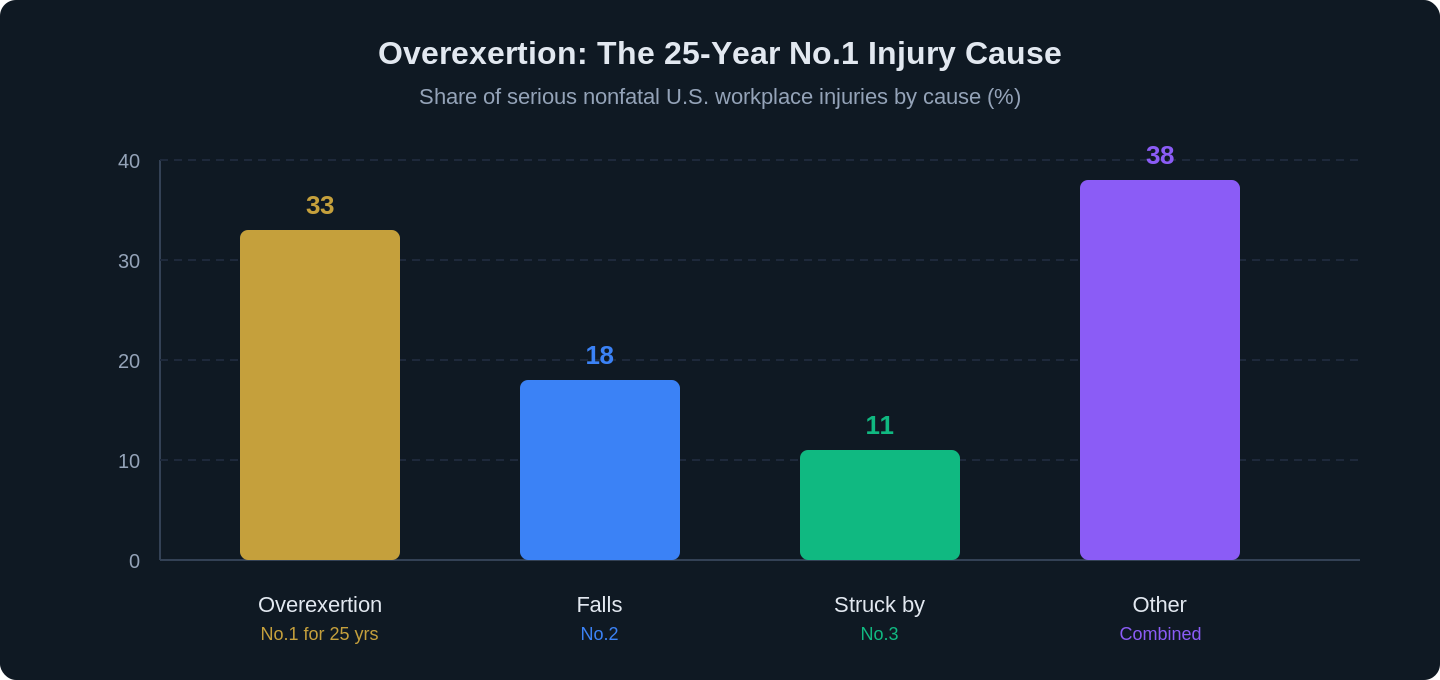
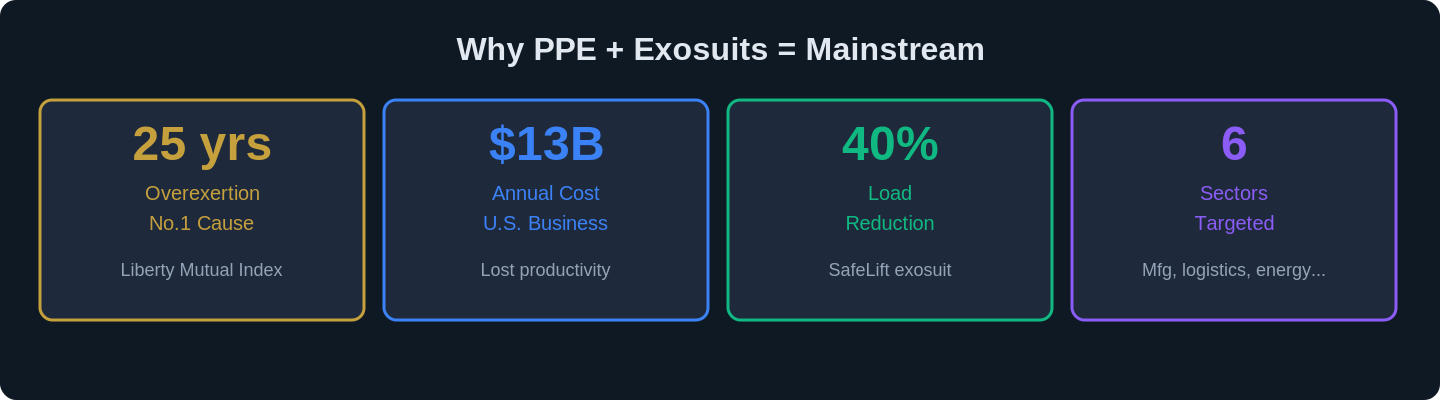
The logic is brutally simple. According to data cited by ISHN, overexertion has been the No. 1 cause of serious, nonfatal workplace injury for 25 consecutive years, costing U.S. businesses more than $13 billion annually. Traditional PPE protects workers from external hazards — cuts, impacts, chemicals. But it does nothing for the internal, cumulative trauma of lifting, lowering, and reaching thousands of times a shift. Musculoskeletal disorders account for nearly one-third of all serious workplace injuries, and no amount of better gloves fixes a strained lower back. The industry needed an active solution, and exosuits are it.
The idea that workers should just expect to go home sore, that aching backs and worn-down bodies are part of the job — we don't accept that. There's always a better way to protect people, and it's our job to continue to find those innovations and help bring them to life.
What the Convergence Actually Changes
When a global PPE distributor adds an exosuit to its range, the entire adoption pathway shifts. Instead of a bespoke robotics pilot managed by an innovation team, exosuits start moving through the familiar safety-equipment channel: standardized sizing and fit-testing, safety data and compliance documentation, distributor stocking, and fleet servicing. FSM Magazine notes that SafeLift is a soft, lightweight, powered exosuit whose motion sensors activate a small motor on each lift, reducing load by up to 40% while letting workers bend, twist, and move naturally for a full shift. That 'all-day wearable' design is exactly what makes it a PPE product rather than a robotics experiment.
The Takeaway for Procurement and EHS
Expect powered exosuits to appear on your next safety-equipment RFQ. The practical implication: start building the internal playbook now — define which roles qualify, set fit and comfort criteria, budget for training and servicing, and identify a distributor relationship. The companies that treat exosuits as standard PPE, rather than a one-off innovation project, will be the ones that actually reduce their overexertion injury rates — and their workers' comp costs — at scale.
Sources: Verve Motion (press release); ISHN; FSM Magazine