
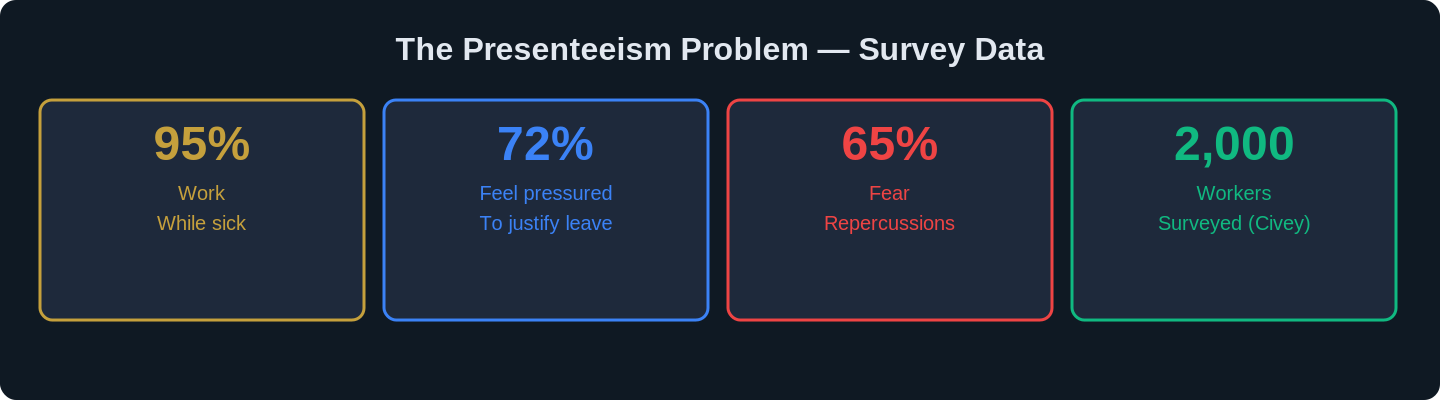
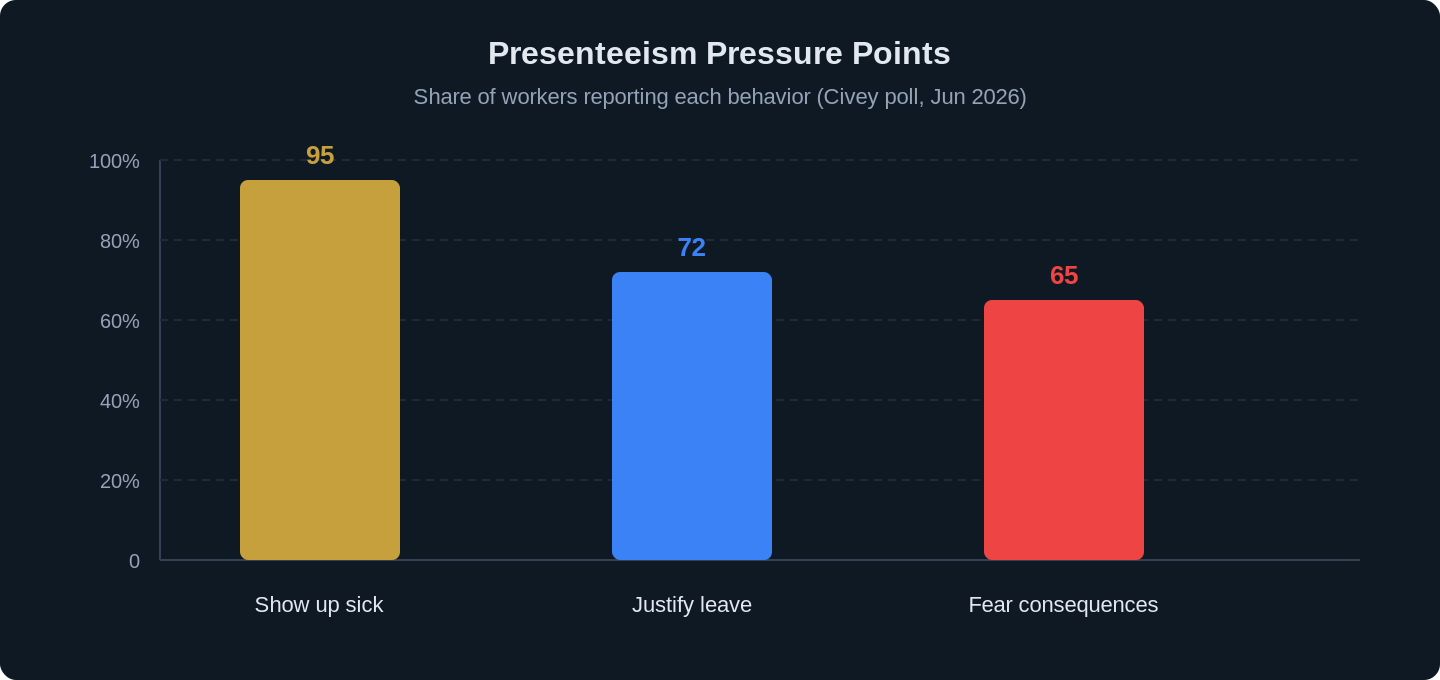
Here's a number that should alarm every EHS manager: 95 percent of workers show up to work while sick, according to a nationwide Civey poll of 2,000 participants conducted in June 2026 and reported by Ad-hoc-news.de. Not 50 percent. Not 70. Ninety-five. And 72 percent of those workers say they feel pressured to justify taking sick leave, while 65 percent fear professional repercussions for calling in. This isn't dedication. It's presenteeism — and it's quietly destroying your workforce's musculoskeletal health.
The Myth: 'Tough Workers Push Through'
The cultural script in most labor-intensive industries is clear: real workers don't complain, don't take days off, and definitely don't ask for ergonomic accommodations. But the medical evidence tells a different story. The same report documents a 16-year-old student who developed kyphosis and scoliosis after months of poor sitting posture, and a 26-year-old office worker who lost the natural curvature of his cervical spine from prolonged sitting and smartphone use. Both required weeks of therapy to recover.
These aren't edge cases. They're the endpoint of a pattern that starts on your factory floor, in your warehouse, and on your construction site: a worker ignores early discomfort, compensates with poor mechanics, and accumulates micro-damage until it becomes a recordable injury — or a career-ending condition.
The Data: Presenteeism Costs More Than Absence
When 95% of your workforce is showing up in pain, you're not getting 95% productivity. You're getting slower movement, more errors, higher defect rates, and a pipeline of future MSD claims. The German survey found that ergonomic solutions — height-adjustable workstations, back-friendly lifting training, modular systems for workers with physical limitations — are increasingly being adopted as retention and inclusion tools, not just safety compliance measures.
Ignoring those warning signals not only harms health but also leaves employers exposed if an incident occurs.
The Takeaway
Audit your culture before you audit your workstations. If your workers believe that reporting pain or requesting an ergonomic adjustment will be held against them, no amount of equipment investment will fix the problem. Start with three actions: train supervisors to respond supportively to early discomfort reports, make ergonomic assessments routine rather than reactive, and track presenteeism indicators (overtime in pain, modified-duty requests, early-shift fatigue) alongside your standard injury metrics.
Sources: Ad-hoc-news.de / Civey poll (Jul 18, 2026)