
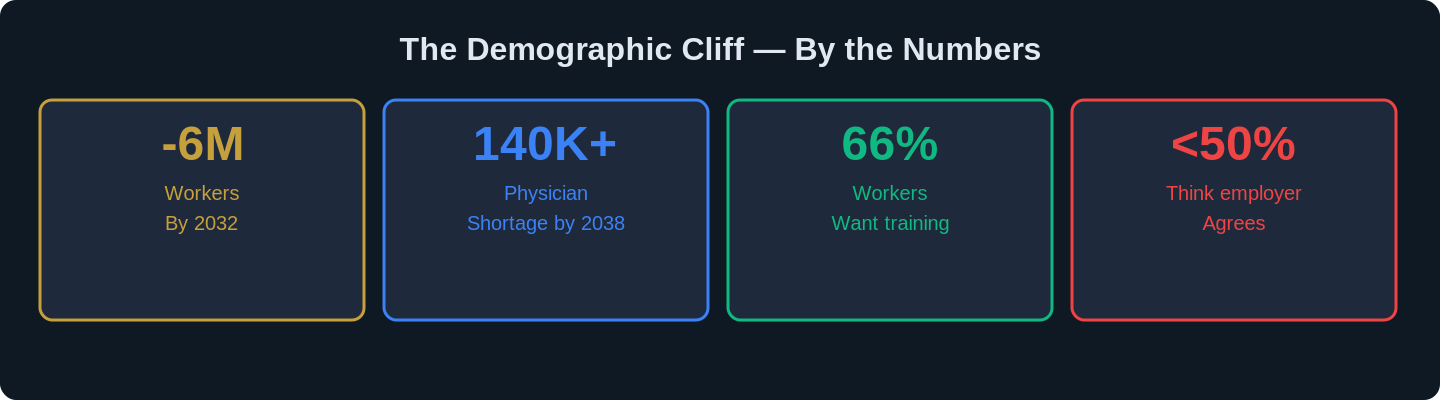
The U.S. labor force could shrink by nearly 6 million workers by 2032, according to new Indeed Hiring Lab research cited by Fortune. This isn't a recession blip — it's demographic math. Birth rates have been falling for decades, and Baby Boomers are retiring faster than younger generations can replace them. For operations leaders in manufacturing, construction, and logistics, the implication is stark: you can't hire your way out of this shortage.
The Sectors Hit Hardest Are the Ones You Can't Automate Away
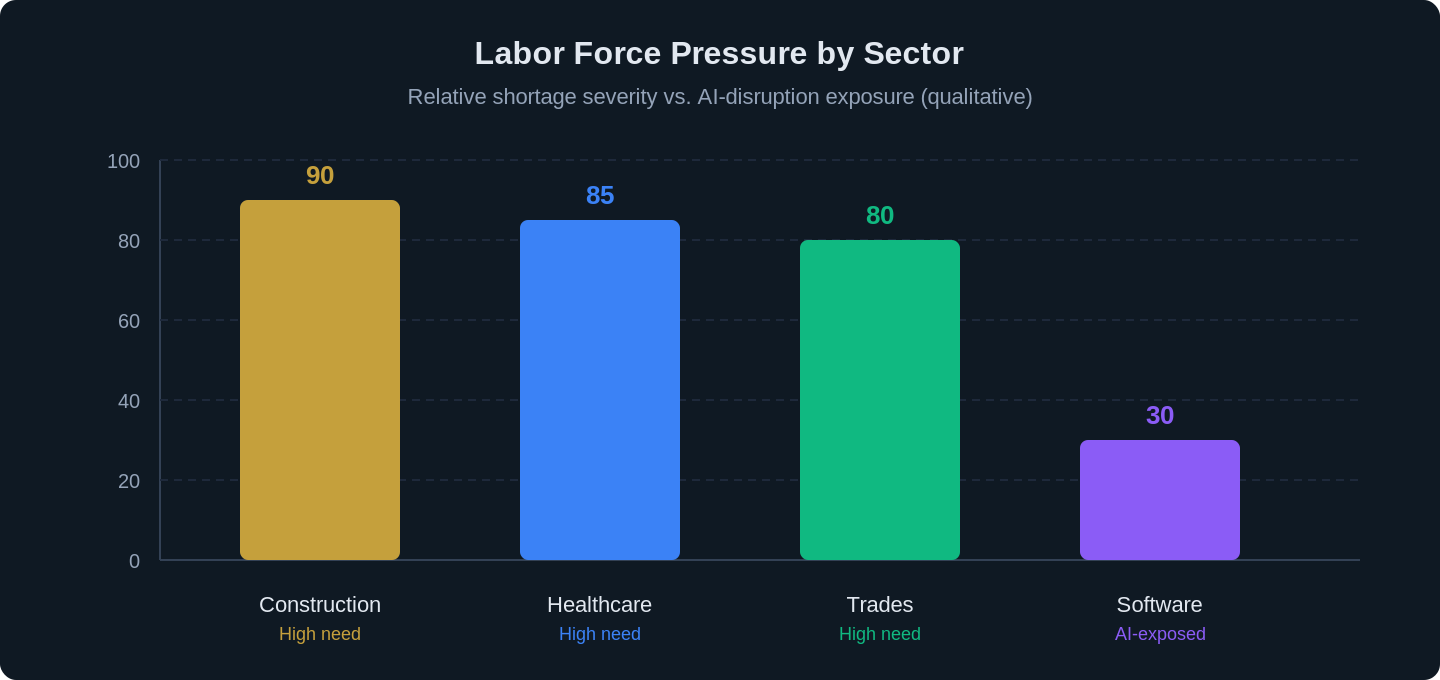
Indeed chief economist Svenja Gudell makes a counterintuitive argument: the occupations facing the most severe worker shortages — healthcare, construction, skilled trades — are the same ones least likely to be disrupted by AI. A software developer's job can be augmented by generative AI. A nurse's bedside care cannot. A construction worker's physical labor cannot be replaced by a chatbot.
The Health Resources and Services Administration projects the U.S. could face a shortage of over 140,000 full-time physicians by 2038. Manufacturing employers report the same problem: they cannot find enough qualified workers, even in a slower labor market. Meanwhile, hiring has cooled in white-collar sectors like software and marketing — the very industries most exposed to AI.
The occupations facing the biggest demographic pressures are not the same occupations where labor is most readily available.
Why This Is an Augmentation Argument
If you can't add more workers, you have to get more from the workers you have — without breaking them. That's the core case for physical augmentation: exoskeletons, exosuits, and ergonomic assist devices that reduce fatigue, lower injury rates, and extend the productive careers of an aging workforce. A 55-year-old assembler who can work comfortably for five more years is worth far more than a recruitment budget that can't fill the role at all.
Gudell's research also highlights a skills-mobility problem: displaced office workers can't instantly become electricians or nurses. Licensing, retraining costs, geography, and wage expectations create real barriers. An Indeed survey found that while two-thirds of U.S. workers view skill development as a personal priority, fewer than half believe their employer feels the same way.
The Takeaway
Stop treating the labor shortage as a recruiting problem. It's a retention and productivity problem. Every dollar invested in keeping an experienced worker healthy, comfortable, and productive — through ergonomic intervention, augmentation technology, or flexible scheduling — now has a higher return than a dollar spent on a job posting that won't get filled.
Sources: Fortune (Jul 18, 2026); Indeed Hiring Lab (May 2026)